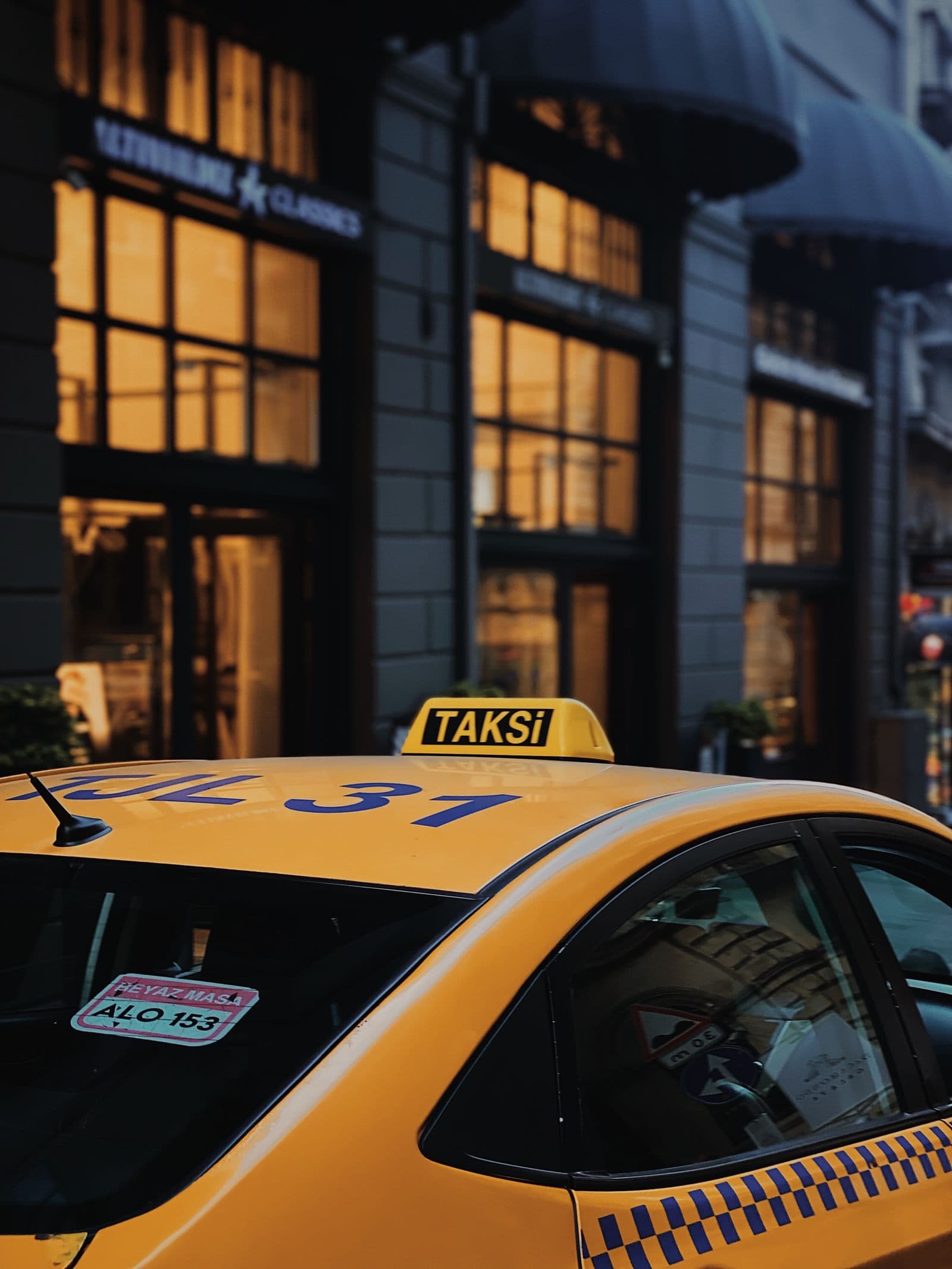
A metered yellow taxi from Istanbul Airport (IST) to Taksim costs roughly 1,800-2,000 TRY (about 33-37 EUR) on the meter plus motorway tolls, while the same trip from Sabiha Gokcen (SAW) runs higher, around 2,200-3,500 TRY (about 41-65 EUR), because SAW sits on the Asian side and the ride crosses the Bosphorus. The 2026 city meter is the same at both airports: about 65 TRY to start, 43-44 TRY per kilometre, and a 210 TRY minimum. Lira prices in Turkey move with inflation, so treat every figure here as "around" and watch the live meter.
Below: the real meter tariff, the tolls added on top, what each taxi colour costs, the airport scams and their fixes, and the moment a fixed-price transfer wins. For a 2 AM landing, see our late-night arrivals guide.
What does an Istanbul taxi actually cost in 2026?
Every yellow taxi in the city runs the identical municipal meter, set by UKOME and the Istanbul Metropolitan Municipality (IBB) Council. The current rates took effect on 16 February 2026 after the latest UKOME tariff rise: about 65 TRY flagfall (the opening fare, acilis), about 43-44 TRY per kilometre, and a 210 TRY minimum fare you pay even for a short hop. The meter also runs a waiting-time charge in stopped traffic, and Istanbul traffic is unpredictable, so a ~2,200 TRY SAW run can top 3,000 TRY at rush hour.
One fact saves you the most money and arguments: there is no night surcharge in 2026. The night tariff (gece tarifesi) was abolished back in 2009, so the meter charges the same at 03:00 as at noon; a higher night bill only reflects slower traffic adding metered waiting time. A driver who claims a "night rate" has started is overcharging, not quoting a real tariff. Several travel pages still print the old surcharge as if it were live; it is not.
Airport taxis are strictly metered: there is no official fixed-price counter at IST or SAW, so anyone quoting a set price before the marked rank is a tout.
Yellow, turquoise or black: which taxi did you just get into?
Istanbul runs three official taxi tiers, and two legitimately cost more. Knowing the colour stops you mistaking a pricier-but-legal cab for a scam:
- Yellow (standard): the baseline meter above, the cheapest and most common at both ranks. Airport lanes may signpost this tier as "orange" (turuncu) at the same rate.
- Turquoise (comfort): newer, roomier cars on a higher meter, roughly 15% more than yellow for the same route.
- Black (premium/large): luxury and large-vehicle service for groups and extra luggage, roughly 70% more than yellow on the meter.
All three queue at the airports and run honest meters; pick a yellow cab for the lowest fare. Card acceptance is being made mandatory across Istanbul taxis in 2026, with certified fare-recording devices and e-receipts rolling out during the year. The catch is that drivers still claim the machine is "broken" to push cash, which is the moment to step out and take the next car.
Airport routes and the tolls on top of the meter
Don't forget the tolls: the toll is paid on top of the meter, not folded into it. The official airport site notes that passengers cover bridge tolls, terminal fees and motorway charges separately. Aggregator pages showing one "all-in" figure are quoting their own bundled transfer price, not a metered taxi.
IST is on the European side and reaches the historic core and Taksim via the Northern Marmara Motorway with no Bosphorus crossing, so you pay only modest motorway tolls (tens of lira). SAW is on the Asian side, so any European-side destination means crossing the strait. That crossing is the big add-on: the Eurasia Tunnel car toll in 2026 is about 280 TRY by day (lower overnight), or a bridge runs a smaller toll. Every crossing is electronic (the driver's HGS tag), so the toll is added to your final fare, never paid at a booth; reimburse only the real published amount.
Realistic 2026 meter fares, plus tolls, confirm before you ride:
- IST to Taksim: ~43 km, ~45-60 min, around 1,800-2,000 TRY on the meter plus motorway tolls. No Bosphorus crossing.
- IST to Sultanahmet (Old City): ~45-50 km, around 2,000-2,400 TRY in light traffic plus tolls, more when congested. European side, no crossing.
- SAW to Kadikoy (Asian side): ~30-35 km, around 1,400-1,800 TRY. No Bosphorus toll, which makes it the cheapest mainland run from SAW.
- SAW to Taksim or Sultanahmet: ~45-50 km crossing the Bosphorus, around 2,200-3,500 TRY including the crossing toll and motorway tolls.
From SAW, staying on the Asian side (Kadikoy, Uskudar) runs noticeably cheaper than crossing to Europe, because of the crossing toll and the extra metered kilometres. We compared route distances against the 2026 meter, and that single Bosphorus toll is the largest slice of the SAW-to-Europe gap. See the SAW to Taksim route and IST to Taksim route pages for the full comparison.
Which scams hit airport arrivals, and how do you stop each one?
The same handful of tricks recur at both ranks. Each has a simple counter-move:
- The fake night rate: "the night tariff has started." It hasn't: there is no night tariff anymore, just one 24-hour rate, so a fare that jumps for being "after midnight" is an overcharge. Insist on the standard meter or step out.
- The broken meter: a flat quote, typically three to five times the real fare. Never ride without a running meter; walk to the next cab in the rank.
- The fare not reset: the meter still shows the last passenger's total. Confirm it starts at the flagfall (around 65 TRY) and photograph that opening reading.
- The long route: "the motorway is closed," then a padded detour. Keep your map app open and follow the route live.
- The banknote switch: your 200 TRY note becomes a 20 while you handle luggage. Hand cash over in full view, say the amount aloud, or simply pay by card.
- The "broken" card machine: a push to force cash so an overcharge sticks. Say kredi karti before you get in; if they refuse, take another cab.
- The terminal tout: someone inside the hall offering a "taxi" at a fixed price. Ignore anyone who approaches you indoors and use only the marked outdoor rank.

Spotting a legal taxi is quick: an illuminated TAKSI roof sign, a plate beginning 34 T (the Istanbul taxi series, e.g. 34 TFR 78), the registration number on the doors, and a working card terminal. The official rank at IST is on the arrivals ground-transport level, signposted in orange near Exits 9 and 13; at SAW it is just outside the arrivals hall. You can confirm the official transport options on istairport.com and sabihagokcen.aero.
If a driver overcharges or refuses the meter, snap a photo of the plate and the meter, keep your receipt or app record, and file a complaint with the Istanbul municipality (IBB) on the 153 line within the city; details are on ibb.istanbul.
Apps, payment and tipping
Hailing through an app cuts the scam risk on a metered ride: it shows the driver and plate, logs the route, and lets you pay in-app so the "broken machine" excuse dies. Local licensed-taxi apps like BiTaksi and the municipal iTaksi dispatch official cabs, not private cars. The snag for arrivals is that foreign visitors often stall at SMS verification on an overseas SIM or fail to link a foreign card, which is exactly the friction a pre-booked transfer removes.
Two things trip up arrivals on payment. First, card payment is being made mandatory across 2026 taxis, so a "no signal" or "machine's broken" is usually a push for cash; carry small lira notes as backup and check your change. Second, the Istanbulkart does not pay taxis; it is for the metro, tram, bus, ferry and Marmaray only, despite how many people top one up expecting it to cover a cab. Tipping is optional, by rounding up the meter with ustu kalsin ("keep the change"); no percentage is expected.
When does a fixed-price transfer beat the meter?
A metered yellow taxi works for a short daytime hop when the queue is moving. In these situations, pre-booking a private transfer through GetTransfer.com is the safer call, locking the price before you land:
- The far SAW run to the European side, where the meter, the crossing toll and a 60-90 minute ride make the final number hard to predict.
- Groups of three or four splitting one car, where a locked door-to-door price often undercuts the meter-plus-toll total.
- Heavy luggage or families, where a black or large taxi at the rank costs a premium anyway and a driver meeting you on arrival removes the hassle.
- Late-night arrivals, when the metro is shut and you want a fixed price with no meter dispute while tired.
A transfer locks the price and puts a named driver at arrivals; a metered taxi can be cheaper on a short, honest daytime run. Compare both on our transfer page and taxi page, and see the FAQ for more on fares and ranks.
Whatever you choose, insist on the meter from the flagfall and pay by card; to skip the queue and meter anxiety, check current transfer rates for your dates on GetTransfer.com. Expect 2026 fares to keep rising, so confirm the live rate before you ride.
Quick answers
Is there a night taxi surcharge in Istanbul?
No. Istanbul abolished the night tariff in 2009, so the meter reads the same at 3 AM as at noon. A bigger late-night fare only reflects slower traffic adding metered waiting time; a driver who says a "night rate" has started is overcharging.
How much is a taxi from Istanbul Airport (IST) to Taksim?
Around 1,800-2,000 TRY on the meter plus motorway tolls, over roughly 43 km and 45-60 minutes. IST is on the European side, so this route has no Bosphorus crossing.
Are the bridge and tunnel tolls included in the taxi meter?
No. Tolls are added on top of the metered fare and charged electronically through the driver's HGS tag, never at a booth. From SAW the Eurasia Tunnel is about 280 TRY by day; reimburse only the real published amount.
Can I pay an Istanbul taxi with an Istanbulkart or a card?
An Istanbulkart does not pay taxis; it covers the metro, tram, bus, ferry and Marmaray only. Card acceptance is being made mandatory across 2026, so a "broken machine" is usually a push for cash. Say "kredi karti" before you get in and keep small lira notes as backup.
How do I know a taxi is licensed at the airport?
Look for an illuminated TAKSI roof sign, a plate that starts with 34 T, the registration on the doors and a working card terminal. Use only the marked outdoor rank: at IST near Exits 9 and 13 on the arrivals ground-transport level, at SAW just outside the arrivals hall.